

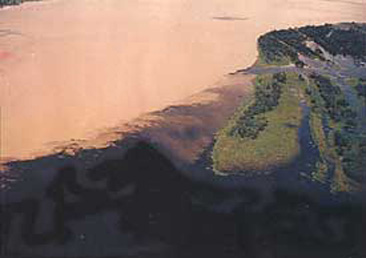
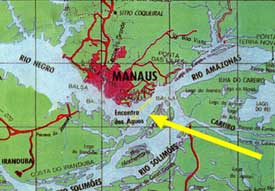
O Encontro das Aguas
The Meeting of the Waters
The Meeting of the Waters

The Amazon is the biggest river system in the world. At it's mouth it discharges 180,000 cubic meters of fresh water per second (compared with the second greatest, the Niger, at 42,000 cu.m/s, or the pitiful Murray/Darling, Australia's greatest river system, at 391 cu.m/s).
Some of the tributaries of the Amazon are mighty rivers in their own right. Sometimes when two of them meet strange things happen – the meeting of the waters.
This is where two rivers of differing temperatures and densities meet, and both rivers are so powerful that they refuse to mix. The first time I saw this happen was on a boat just outside the town of Santarem, where the Rio Branco (a clear water river) meets the Rio Amazonas (a milky brown river). The two rivers run along side each other for a while, reluctantly, eventually mixing.
The second time was sailing on the same boat upriver, just before the city of Manaus. Here the Rio Solimoes (a.k.a. the Rio Amazonas, still milky brown) meets the Rio Negro (a river of black water). The pictures on this page are of this meeting.
Ecological footprint
One's ecological footprint is the amount of renewable and non-renewable ecologically productive land area required to support one's resource demands and absorb one's wastes.
When one's footprint exceeds the amount of renewable biocapacity then this is considered biologically and ecologically unsustainable. If everyone lived like this, we would all die.
There are several sites where you can test yourself. Just type "ecological footprint" into Google. I haven't listed them here because URLs can be so ephemeral.
| hectares per person | |
| Available in the world | 1.8 |
| Australia (average) | 7.6 |
| Me in Australia | 6.8 |
| UK (average) | 5.3 |
| Me in UK | 3.5 |
Showing once again what greedy arseholes the West are, especially Australia.
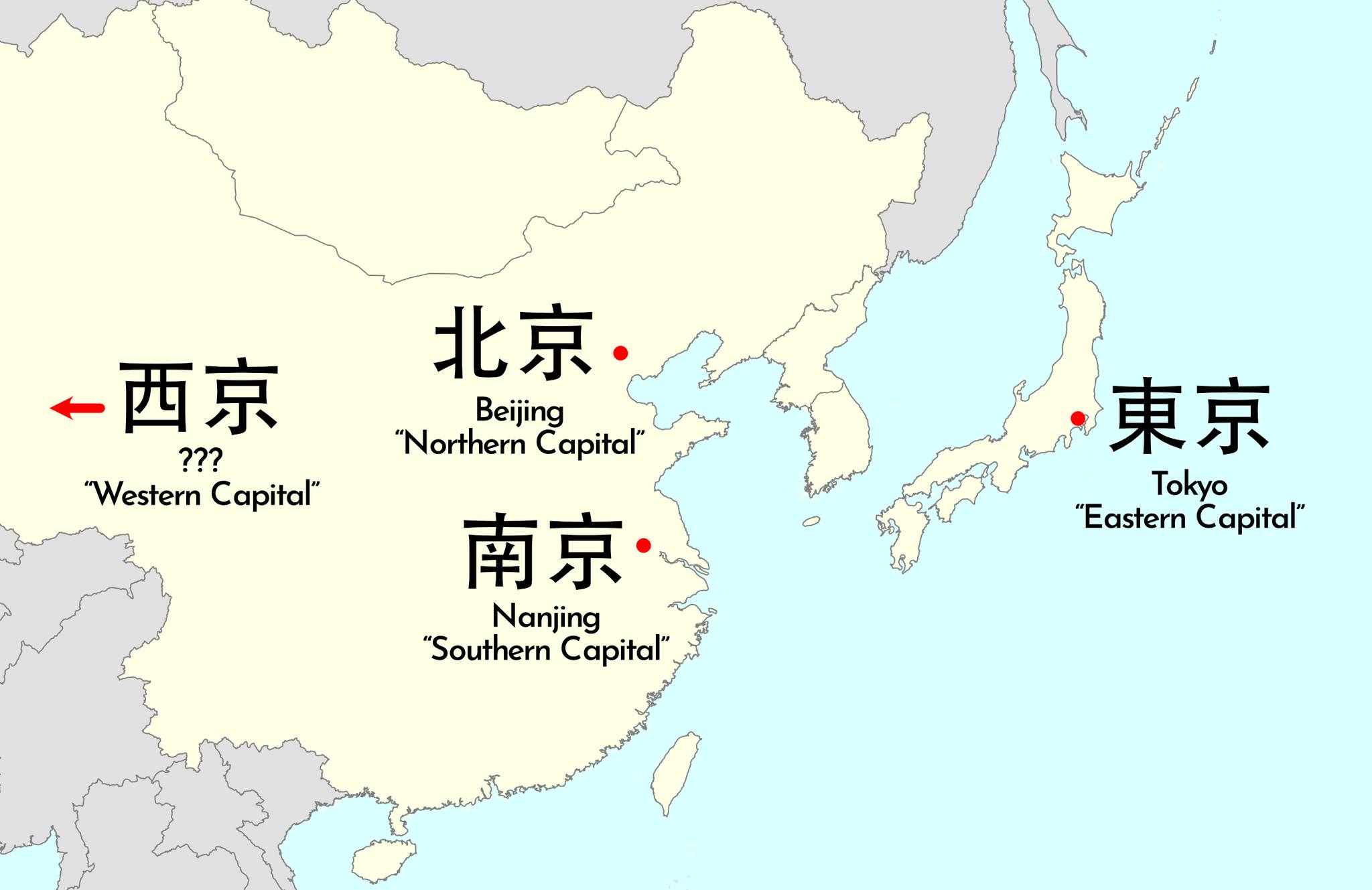
Western Capital?
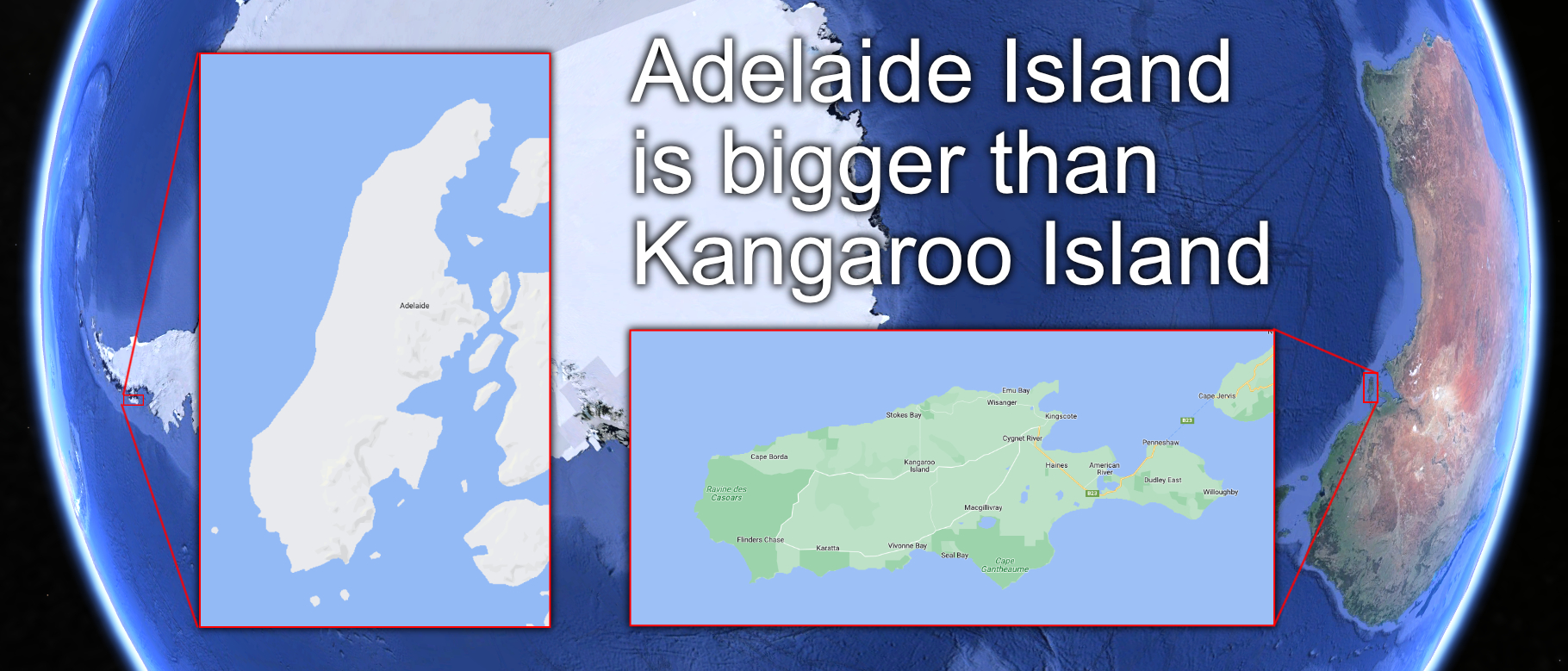
Adelaide Island
Kangaroo Island is off the coast of the state of South Australia. The capital city of South Australia is Adelaide. But there is also an island called Adelaide off the west coast of the Antarctic Peninsula.
Plastic Pollution
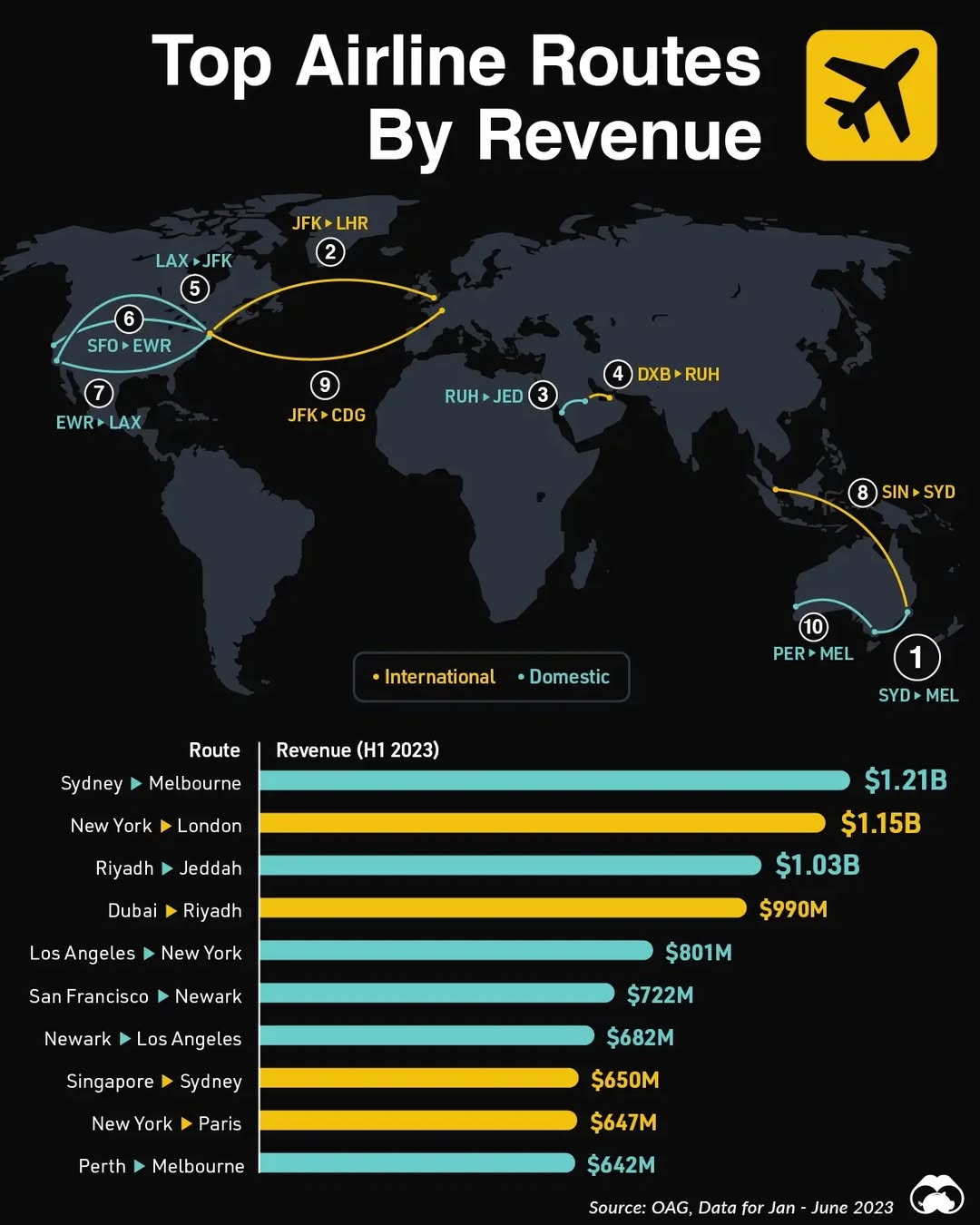
Airline Routes