Modern Berlin
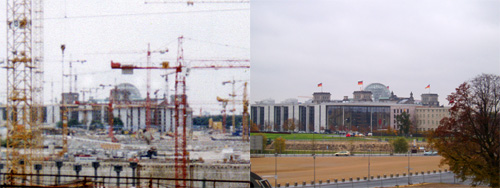
Regierungsviertel Parliamentary Quarter (1999 and 2006)
Germany re-unified in 1990, and the previously cut-off western half of Berlin became the site of the nation's capital once again. Reconstruction created the biggest construction site in Europe, as the re-united city re-built its parliamentary quarter and the area around where East met West. The above pic is almost the same view in 1999 and 2006. What a difference 7 years makes.
I also took a panorama of pics from the roof of the Reichstag in both 1999 and 2006, to show the differences in the views. Click here to open the panorama in a new window.
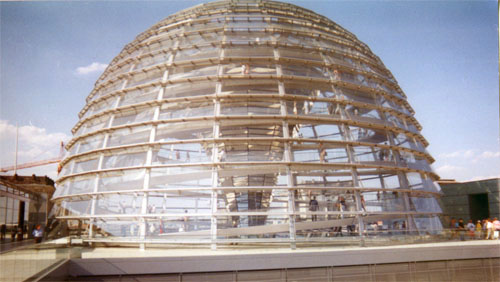
Glass Dome (1999)
During its renovations, the Reichstag got a strikingly contempory glass dome for it's roof, designed by Lord Norman Foster
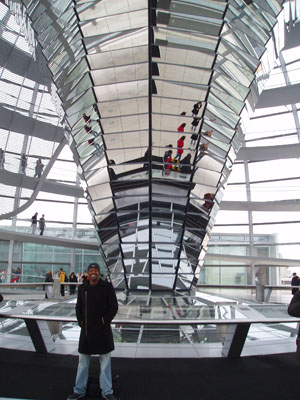
The inside of the dome (with Lee!). Notice the ramps in the background which spiral around the inside of the dome.
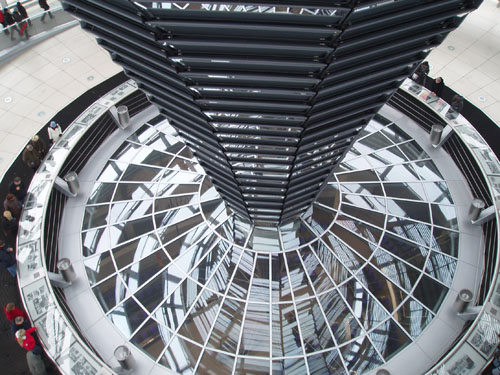
And from the top of the dome. The central mirrored column relfects natural light down into the debating chamber of parliament.
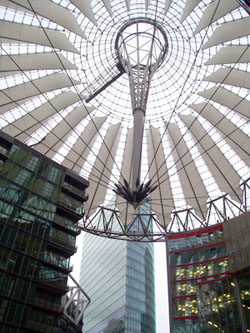
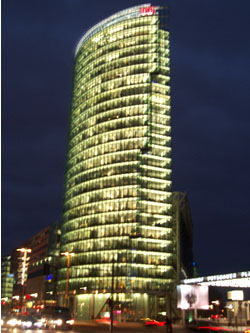
Potsdamer Platz Potsdam Square (2000)
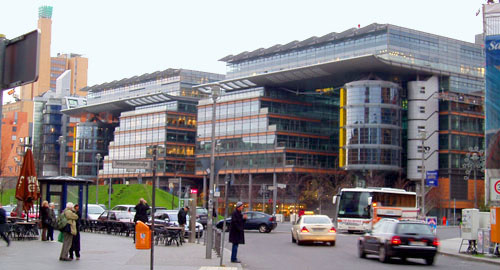
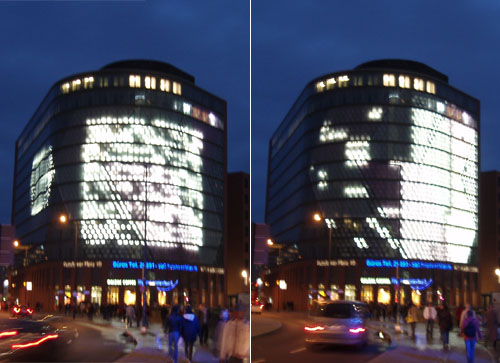
Not to be confused with the town of Potsdam, Potsdamer Platz is an area located alongside Tiergarten in the centre of Berlin that was a site for major major redevelopment around the turn of the millenium, and has now become the new central business district. Above left is the huge canopy that is suspended above the courtyard of the Sony Centre. The building in the middle of the picture is the same buidling, but from the other side, as the building above right.
Bundeskanzleramt Federal Chancellery (2001)
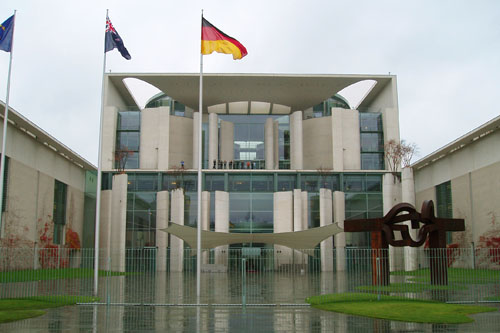
Germany's answer to the White House or Number 10, this is the office and private residence of the Federal Chancellor (Prime Minister). Built next door to the Reichstag and deceptively big – notice the group of people standing on the balcony. (I don't know why there is a New Zealand flag flying).
Jüdisches Museum Jewish Museum (2001)
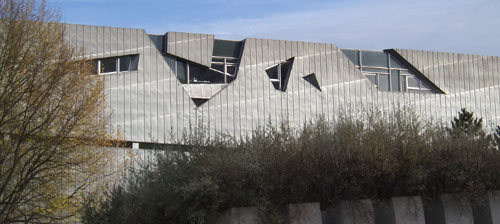
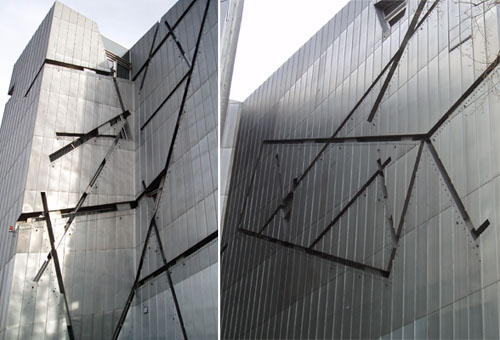
As you can see, a very strange looking building.
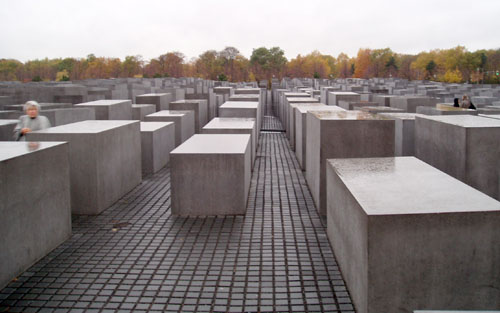
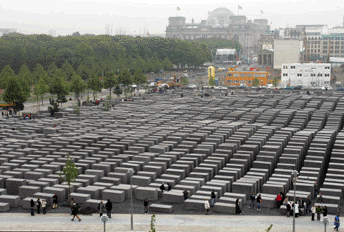
The Memorial to the Murdered Jews of Europe (2005)
Colloquially known as the Holocaust Memorial, this is one of the most significant additions to Berlin recently. 2,711 concrete blocks of varying heights on undulating ground occupy an area the size of a football field. Located at the heart of Berlin, and accesible from all sides. The photos I took from the ground can't convey the feeling of size, so I've included someone else's photo below. Under the Memorial is an information centre, which is now one of Europe's premier resources to documenting the Jews who were killed by the Nazis. The layout of the information centre mirrors the memorial, and the information it presents is quite moving.
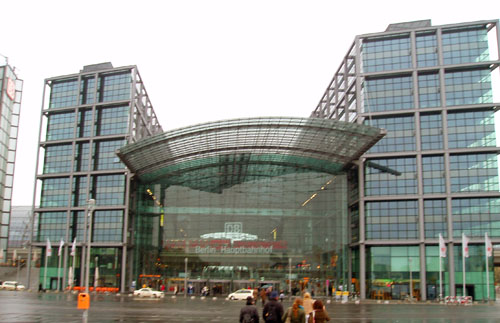
Berlin Hauptbahnhof Berlin's Main Train Station (2006)
When Berlin was split in two it had two of everything. Two opera companies, two Soviet memorials, and two central train stations. The problem when Berlin re-united was that neither of the central train stations were, er… central. So a new one had to be built. Germans have a thing about train travel – they get it right – clean, efficient, frequent, modern etc. etc, and their Hauptbahnhof was going to be no different. Building the most important train station in the country was always going to take time, and it had only opened months before we visited. It is a colossus of glass and steel. The inside is on many levels – you can look down on trains and you can look up to trains, and between is a shopping centre. Very impressive (even if these photos aren't).
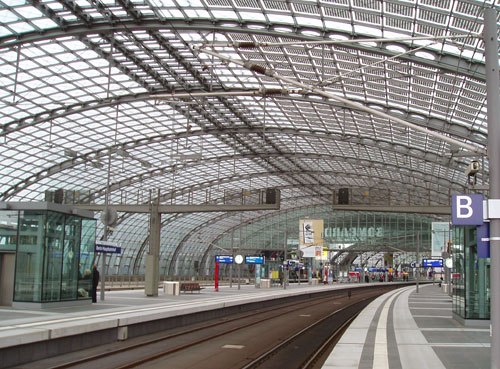
And that's it! With the building of the Hauptbahnhof completed, Berlin has more or less finished reconstruction. It's now completed it's transformation to the most modern city in Europe. Here ends history.
Addendum – Marginalia
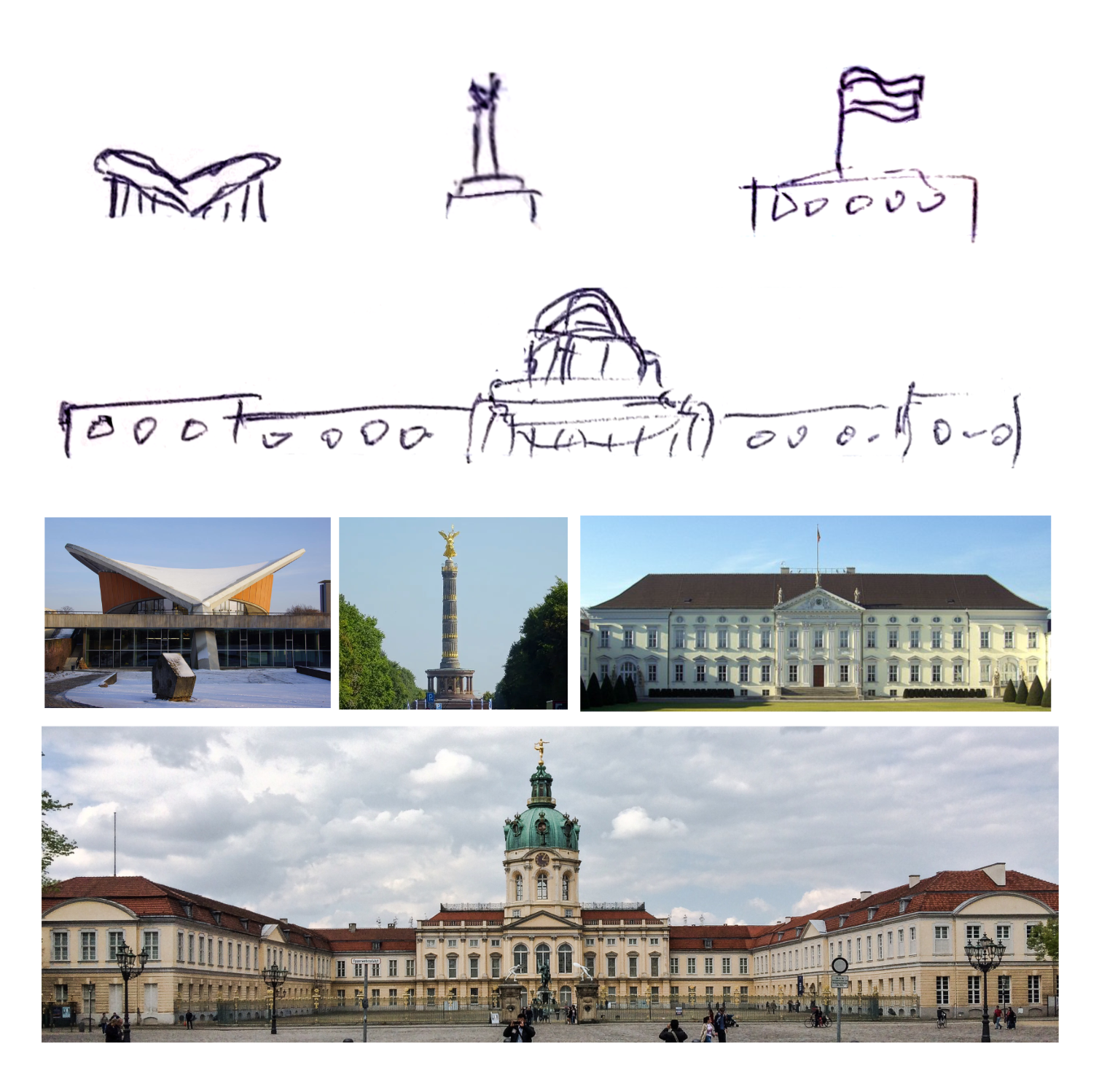
When I first travelled Berlin, I kept a journal, and I sketched various buildings in the margins. Here are my rough sketches and the buildings they were trying to represent.