Prussian Berlin (part 2)
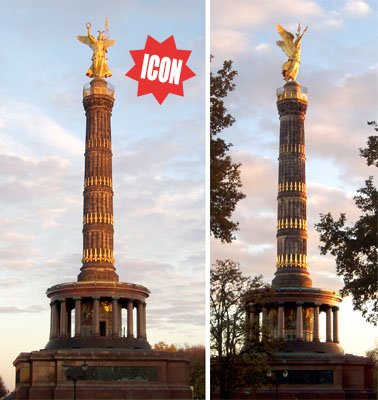
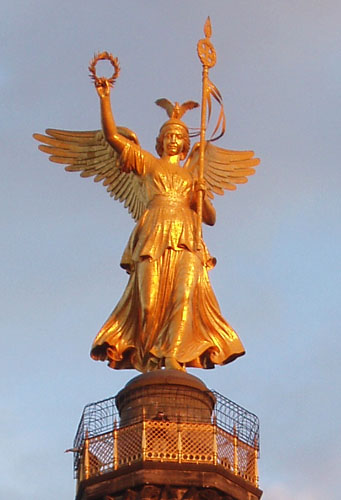
Siegessäule Victory Monument (1873)
Another icon of Berlin. Again the goddess Nike, standing atop a pillar. Originally built to celebrate Prussian military victories, and originally situated outside the Reichstag. Moved by Hitler to the centre of Tiergarten and faced (provocatively) towards Paris, where it remains today.
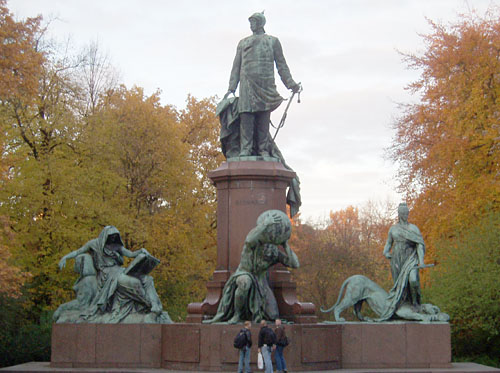
Otto von Bismarck (1871)
The first Chancellor of a united Germany, with Berlin as its capital. This monument sits opposite the Siegessäule.
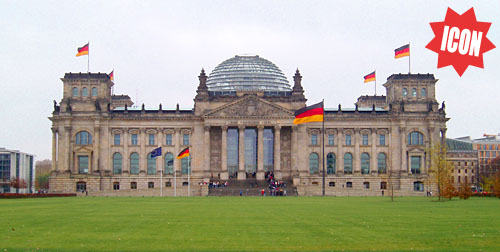
Reichstag (1894)
Yet another icon of Berlin! Originally built to house the 'Reichstag' (Imperial Parliament), the building itself is now known as that, and houses the 'Bundestag' (Federal Parliament). It was burnt by the Nazis, who then blamed it on the Communists (so they could be rounded up). It was not used again as Parliament until Germany re-unified. Then the whole interior was renovated and the magnificent dome was added in 1999. More on that later.
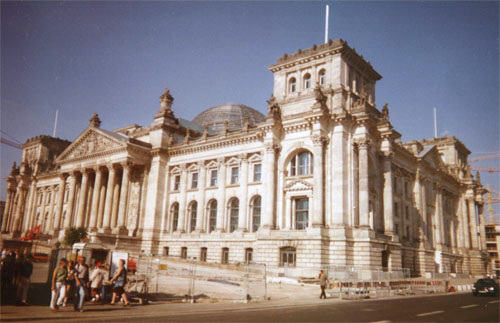
Summer 1999
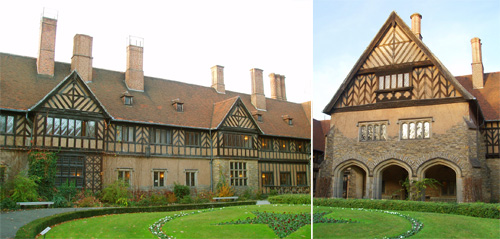
Schloss Cecilienhof Cecilia's Court Castle (1917)
Back in the town of Potsdam, this pseudo-Elizabethan 'castle' was the last of the palaces that the Prussian royal family built. The last crown prince, who didn't become king, lived here with his family. Below, notice the fancy chimneys and the topiary bushes.
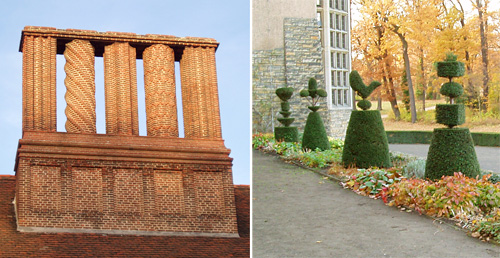
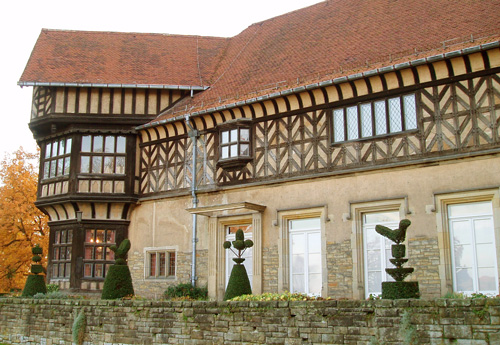
This house is only a few hundred metres outside the (rather generous) city limits of Berlin. When the Berlin Wall was erected around West Berlin, it passed along the bottom of the garden. The room at the bottom left of the below picture was the final meeting place of the Allied leaders – Stalin, Churchill and Truman – after the Second World War.
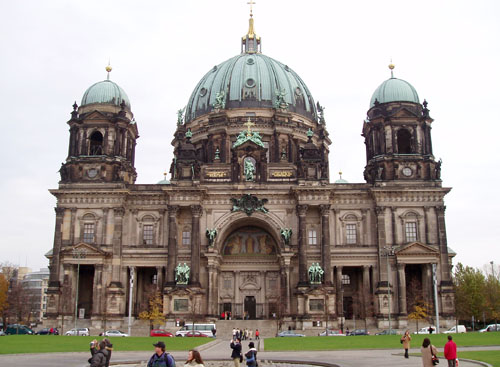
Berliner Dom Berlin Cathedral (1905)
In the Mitte (Middle) district of Berlin.
